paper: pretty paper. true stories. {and scrapbooking classes with cupcakes.}

lovely to meet you Twitter Facebook Pinterest YouTube

Take a Scrapbooking Class

online scrapbooking classes

Shop Shimelle Products

scrapbook.com simon says stamp shimelle scrapbooking products @ amazon.com shimelle scrapbooking products @ amazon.co.uk

Reading Material

travel

Adventure Scrapbooking :: a travel journal ready for the road

adventure scrapbooking :: a travel journal
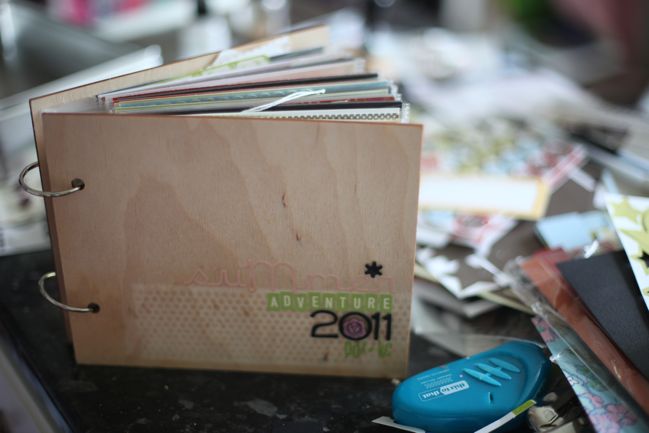
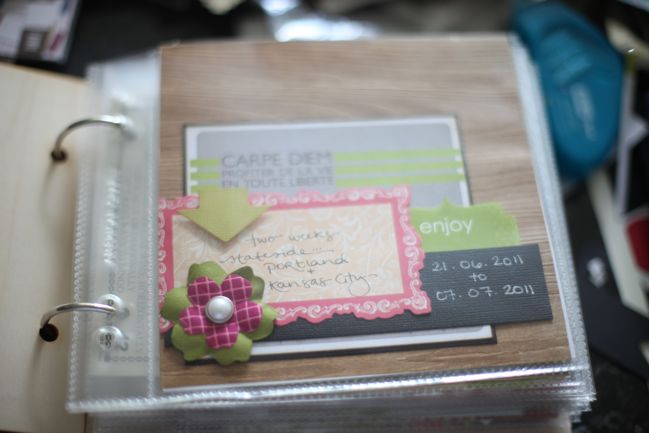
I’m heading out tomorrow for a little adventure. Small scale this time – just two stops and two weeks. Since I am checking a bag, I can take scissors. Scissors and a little travel journal to scrapbook a bit about each day for the next fortnight. (And thus, my desk is currently a total wreck.)

adventure scrapbooking :: a travel journal
The only things that are actually created are the cover and the title page – both very simple. The book is 6×6 with wooden covers and two binder rings. Everything on the cover is held in place with diamond glaze, so that should keep it from falling apart. In theory. Most of the inside pages have page protectors (I’m using the 6×6 page protectors by American Crafts).

adventure scrapbooking :: a travel journal
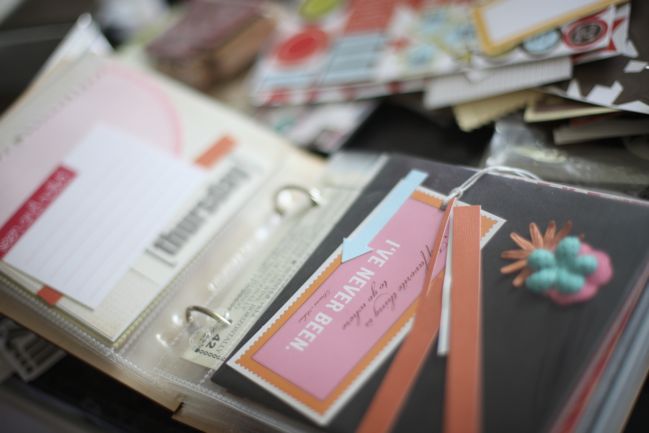
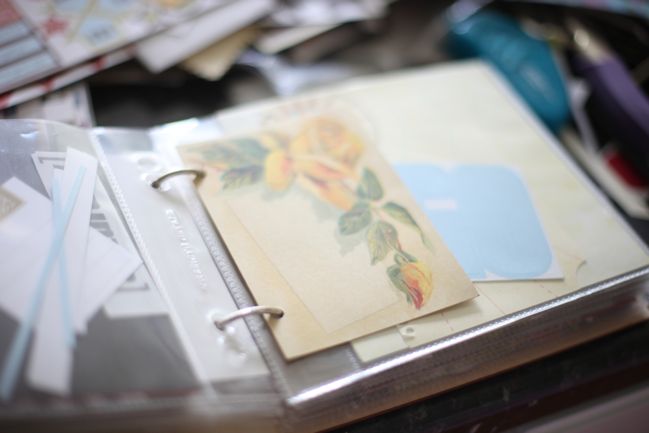
All the remaining pages have things just waiting. It’s a little bit like a mini kit each day instead of all those same supplies mixed up in one big batch. But nothing is stuck down yet so if the colours seem wrong for that day, it should be easy to switch for something better.

I’m planning to fill the pages with memorabilia and writing, plus Instax photos and maybe some other images here and there. Here and there I’ve added black chipboard pages from 7gypsies, to make into little feature collages as I go. I try to add something like that to each of my travel journals if possible. (You can see some of those in this book.)

adventure scrapbooking :: a travel journal
Since this little book is just for fun, I decided to allocate some older supplies that needed a purpose, including some kits. The wooden album covers and a few other bits came from a class kit that has been on my shelf more than three years. A bunch of the papers, die cuts and rub-ons came from a Creating Keepsakes travel journal kit that I ordered with great intentions but never used. When I opened it, I even found memorabilia I had stashed there from a trip in 2009, so I think I lugged the entire kit around for the whole trip and never actually used it. I wanted to include plenty of journaling papers so I went through a big stack of all those spiral-bound journaling pads and tore out about two dozen different designs and added some embellishments that matched too. Then I added just a couple newer things to jazz it up a bit: a Jenni Bowlin Hodge Podge minibook kit (separated and used throughout the scrapbook instead of as the book itself) and a few different letter stickers. But behold: no butterflies. We shall see if I give in and borrow my grandmother’s Martha punch to stave off butterfly withdrawal.

adventure scrapbooking :: a travel journal
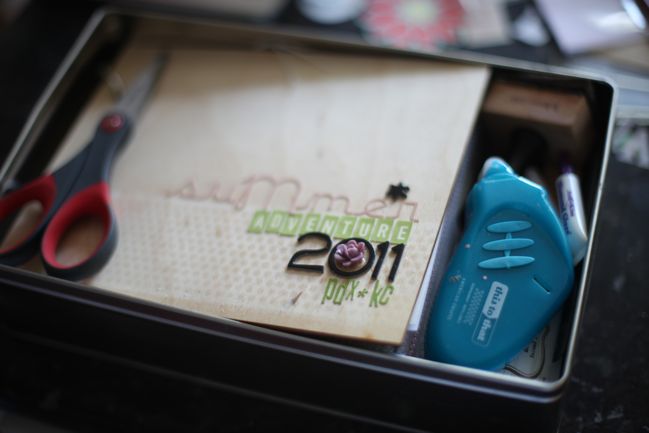
The CK album fit inside this tin, but it would take up the entire space. With the 6×6 book inside the tin, I have room for the essentials, including scissors, adhesive, pens and ink pad. This is my entire box o’ craft for my suitcase! Though not to worry, as I’ve been working on lots of projects of the 12×12 variety to share with you here, so I’m not disappearing from blogland in the slightest.

Have a lovely week!

xlovesx

Scrapbooking Giveaway Day

scrapbooking giveaway day
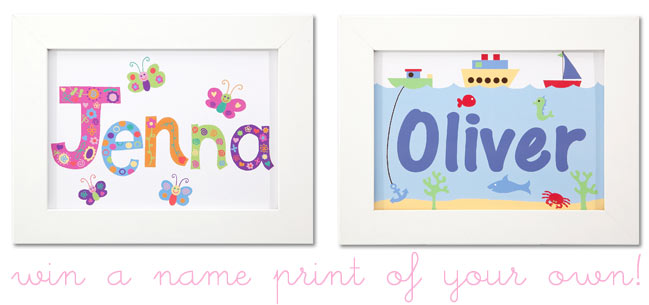
scrapbooking giveaway :: name prints from clarkie designs
This weekend, one commenter will win a name print (with the name of your choice) from Clarkie Designs.

Clarkie Designs is the art studio of Emma Rogerson, who loves creating unique and affordable wall art for children and babies. She started Clarkie Designs when she couldn’t find any wall art she loved for her own children’s bedrooms. So she designed and made her own, first for her son and two years later for her daughter. It was only as they started to grow up and notice their surroundings that Emma realised how stimulating and exciting wall art can be for children. Emma reports, “My little boy loved to point out his pictures and as he grew bigger he tried to say the words. He still likes to comment on my designs!”

All Emma’s pictures are either hand cut collages or fun, original prints. Included in the range are personalised names and initials as well as mini framed prints ideal to hang on bedroom doors. They all make great presents, both for children’s birthdays, christenings and new arrivals. Click here to visit Clarkie Designs and have a look for yourself.

To enter, just leave a comment on this post. If you could have any name, what would you call yourself?

Entries close at midnight Sunday UK time and the winner will be posted Monday evening, so be sure to check back to see if it’s your lucky day!

Good luck!

xlovesx

Five ideas for scrapbook journaling about places

scrapbook journaling :: 5 ideas for writing about places
scrapbook journaling :: writing about places
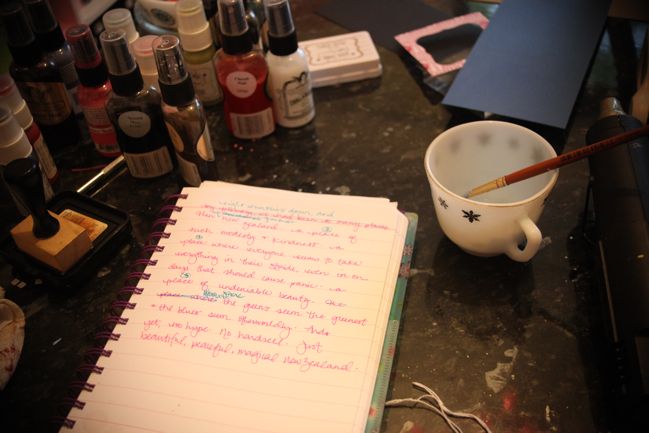
What appears on my work desk? Plenty of crafty stuff – paper, paint, adhesives, mists, ink… and a notebook and pens. Because it’s not uncommon for me to draft my journaling on paper first, to get an idea for what I want to say and how I want to say it. Some pages work best with the devil-may-care attitude of ‘I’ll just write until the space runs out’ but there are so many times when I’d prefer to know what words I want to use first so I can be sure to include that space in my page design. So I jot notes, I write drafts and I edit in my notebook until I get something that seems purposeful to me. Today, my notebook and I have a new five ideas to share: five ideas for journaling about places. Because lately, that’s been a pretty big topic in my writing. In case you hadn’t noticed. But these ideas can be adapted to other topics too, so feel free to grab your notebook and pretty pens even if you haven’t been away from home for quite some time.

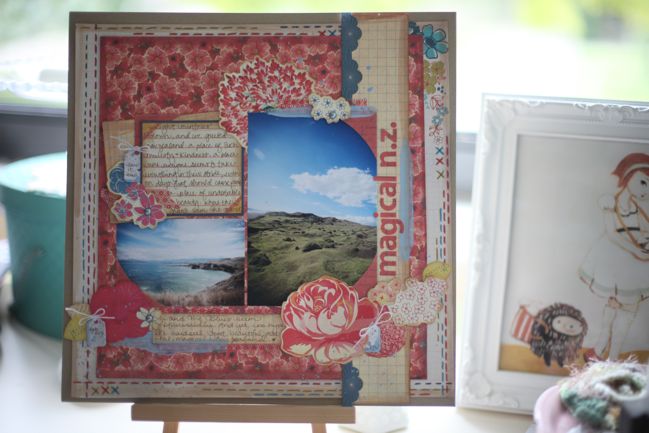
scrapbook page :: journaling about places Page inspired by this sketch from the Sassafras blog.

Take something simple and repeat it three times
Repetition is such a powerful device from something so very, very simple. It’s the reason why we remember advertising catchphrases for years. It’s the reason why remember the chorus to a song we never tried to memorise. And it’s the reason some smooth speakers can have you believing in their cause in about sixty seconds – because taking something simple and saying it three times with a bit of alteration is the perfect way to deliver information to the brain. It’s a beautifully simple way to write about a memorable destination. Think of a place right now and jot this down in your notebook:
The place where…
The place where…
And the place where…
Now fill in the blanks. There must be three different things you remember about that particular location. Think of different things you might have experienced: how did you find the nature of the people there? What did it look like? How did it make you feel? Then have a look at your group of three things. Does this stand alone and create the full memory for you? Or do you want to add more text to this and include the three things at the beginning, middle or end of a longer piece of writing? Or if you’re feeling particularly verbose, expand each of the three things and you’ll have three full paragraphs that each start with the same phrase, combining to really tell the reader so much about your experience there.

scrapbook page :: journaling about places layout ©twopeasinabucket.com. Click here for full page and supplies.

List what you observed
If you just froze when I mentioned the idea of paragraphs, relax. For some reason, paragraphs intimidate some writers and really there’s no need. Paragraphs are just a collection of smaller thoughts with a common theme. They are a folder or a container to keep things organised. And we all know sometimes the stuff comes before the storage. Words and phrases and ideas can come way before paragraphs too.
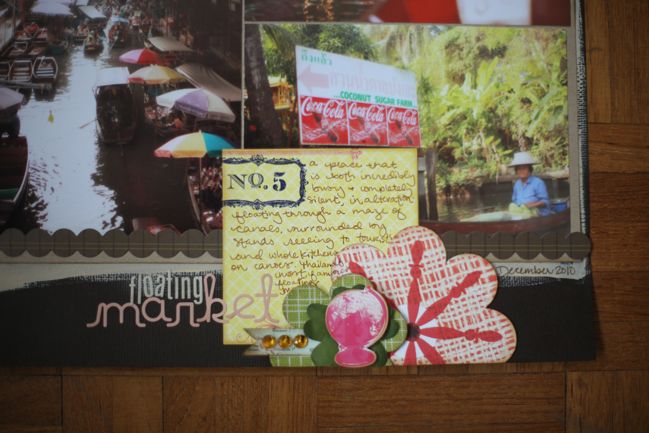
Grab your notebook and think back to a place you have been. Look at a photo to refresh your memory, perhaps. List things you remember as they come to your mind. This is just to gather your thoughts, so don’t censor what you write down – just try to sort different memories into words and phrases. On this page about the floating market in Thailand, I started with lots of different words in my notebook, and then took them one step further to give them balance. I found the things I remembered could be phrased in the same way: with actions and positions. (If you love grammar speak, I mean verbs followed by prepositional phrases, but there’s no need to be a grammar purist to use this technique yourself.)
Floating through a maze
Surrounded by stands
Selling to tourists
See how each of these has a similar set up – something active at the beginning then visual information. (Purists, you’ll notice these aren’t completely the same construction – I love the flexibility in finding something that is pretty close rather than feeling bound by a formula. It should help, not leave you stuck, right?) Finding a pattern for your lists can give them polish and even make them a bit poetic! In fact, one of the poetry exercises I used to work on with my students at school is pretty worthwhile for scrapbookers too. Think of a memory and write a list of -ing words (and then feel really cool and call them gerunds if accurate terminology makes your day). Then go through the list a second time and add one more word before or after each gerund. Just one word is fine, unless a word inspires you to write more. You can use that list on its own as your journaling or add more detail to this for your scrapbook page. Don’t be afraid to try new formats that don’t sound like a news report of the event. There is nothing wrong with something a bit more lyrical!

scrapbook page :: journaling about places
Depend on pronouns
A little secret for you: one of my very favourite ways to write is anything that would make my seventh grade English teacher squirm. Specifically seventh grade with Miss Parks. Not that I didn’t get along with Miss Parks! Actually she taught me very, very much. But she also liked to play by the rules. I think I actually memorised the text book that year. At the end of the year, I could recite the rules of grammar and I was pretty darn quick with the red pen. I am forever thankful for her insistence upon learning those rules by rote because a few years later I realised just how much fun it was to break them. On purpose. And I always imagined this would make Miss Parks squirm. Depending on pronouns is one of those squirm-worthy things.

A pronoun is a word that replaces another noun – often a name. He, she, it, them – all pronouns. Words we use all the time without thinking about it. But we also know that a conversation that depends on pronouns could be very confusing. We use names and other nouns to make it clear who he, she and it may be. On a scrapbook page, we have something else to help: photographs. If you have a picture with only one male, one would assume the ‘he’ in your accompanying writing is that person, right? Likewise for she, it or them. Therein lies a little trick that can really focus the emphasis of your writing and make my seventh grade English teacher squirm. Seriously, everyone wins!

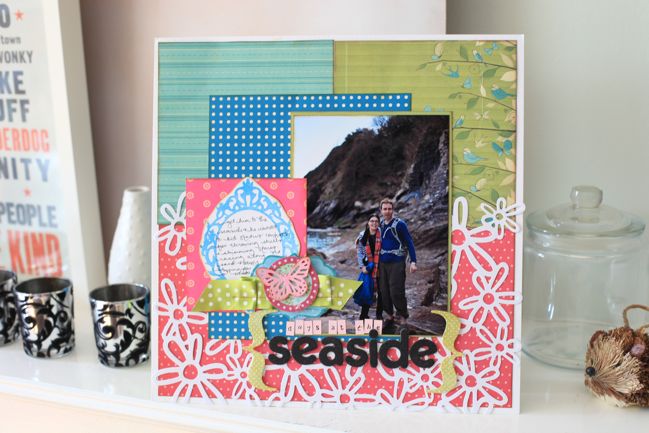
This scrapbook page lives in our 2009 album and it’s most definitely not the only photo of The Boy and I. By the time you get to this page, you’ll know who we both are. In fact, you’ll also know where we are because a few pages before explain that we took a week to stay in a little converted church in Cornwall, going on long coastal walks with The Boy’s extended family. I didn’t need to repeat all that here – I could focus on another aspect of the story. By starting with Get him to the seaside, I could focus on how the location affects his demeanour. Throughout all the journaling, I never named him nor the particular place. Instead, all those references to what ‘he’ says or does or feels are a bit more detached. Almost like observing something scientifically, but also a bit rebellious. A bit aware that it’s breaking the rules, but knowing that it puts the focus on the other words, which changes their emphasis. If this technique seems a little awkward, grab your notebook and write a few sentences that just retell what happened at one particular place. Write it just how you would ordinarily. Then go back and cross out all the names and replace them with he, she, it, they or any other appropriate pronouns. Read it back and see how it has changed the sound of your story.

By the way, this is probably another reason why I love organising my pages chronologically: it helps tell the story from one page to the next, even when those pages aren’t created at the same time.

scrapbook page :: journaling about places
Redefine your audience
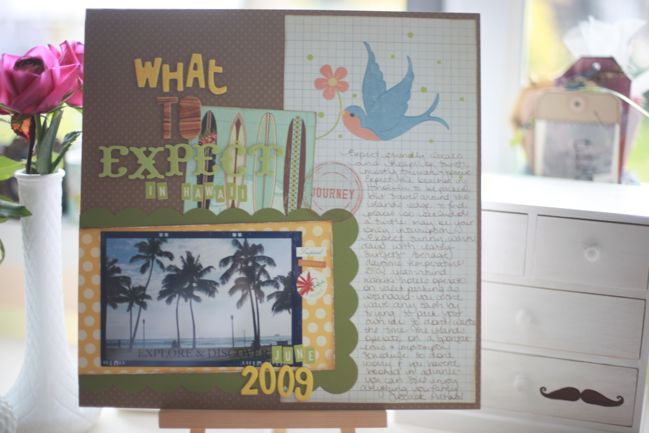
When you journal on your scrapbook page, to whom do you usually feel you are writing? Who is the intended reader? Do you feel you’re writing to yourself, your children, future generations or some unknown reader that could be anyone? There is no right answer here – I just think it’s worth considering. And worth changing sometimes! So take a very specific audience and write to them. In this case, instead of writing to some mystery individual who is interested in our life story, I wrote to a specific mystery individual, traveling to Hawaii. The resulting journaling covers things to expect on their visit, which was helpful in rounding up a bunch of random thoughts I wanted to include in the story of this adventure. I mean really: how much might I actually have to say about a photo of palm trees? And I have a great deal of those! Where else would a bunch of palm tree photos not be out of place? In a tourist guide to Hawaii! So that’s how I found my new, imagined reader for this particular page.

Other ways you could redefine your audience include writing an instruction manual for how to pack your suitcase, an annotated set of directions for a road trip or a note to the staff of the amazing cafe you discovered on your travels. Will any of those audiences actually read what you write? Probably not. But it will tell a very different angle of the story and your ‘real’ reader will understand you fully. And quite likely appreciate the different perspective you’ve recorded.

scrapbook page :: journaling about places See this post for full page.

Admit a change in perspective
Which brings us to perspective indeed. Scrapbooking is by and large a case of nostalgia. We retell memories. Aside from a few projects wherein we write about goals, dreams and plan, we write about what has already happened. We don’t even do that very promptly sometimes. We have photos that are months or years old and when it comes to writing the journaling, we sometimes pretend that we wrote the words at the same time we took the photo. No one needs to know that there might be a big gap between photo and words. That’s a perfectly valid technique and something I do throughout my albums. But I also like to admit the gap from time to time.

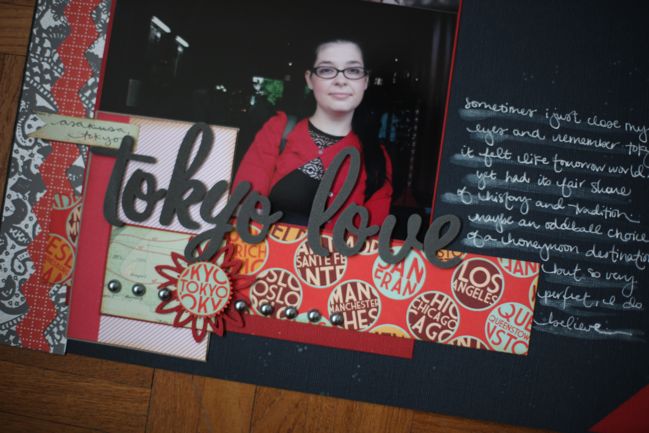
Take the photo that is months or years old and grab your notebook once more. Write from the perspective of now and how that place changed you or how you are grateful for what you learned and experienced while you were there. What memories have really stuck with you? What makes you want to go back? Or stay away? I often find when somewhere I’ve been and loved ends up in the headlines, there is some sort of emotional link that’s triggered. The financial crisis in Iceland, the earthquake in Japan and the tornado in Missouri all had tugged a bit more at my emotions than similar disasters in places I’ve never been. Not that I’m heartless about what happens in the places I haven’t seen – just that there is simple little connection to the places we have known and loved. It doesn’t have to be anything big like that either – a particular memory might just be on your mind due to an anniversary on the calendar, a friend going to visit the same place or even a dream. If you feel reflective, write it as such and use phrases that make that clear – sometimes I remember, I wish I could go back to and something that has stuck with me are all really easy ways into reflecting on a particular memory.

There is no wrong way to tell your story, and it’s not about writing a lot versus a little. But when a non-scrapbooker dismisses scrapbooking as ‘just’ pretty paper, this is the part that makes everything a little more significant for me. I love photos, I love pretty paper but I really believe my most important pages are those that start with my notebook and a pen rather than my favourite stamp, a beautiful paper or maybe even a favourite photo. That might go a little way in explaining the entire reason why I call my blog pretty paper, true stories.

If you want to focus more on what you write in your scrapbooks, you might consider True Stories. It’s an online workshop I ran last year, but you can sign up at any time and have permanent access to all the class materials so you can follow along at your own pace.

xlovesx

Scrapbooking sketch of the week

Scrapbooking sketch and page ideas
scrapbooking sketch and page ideas
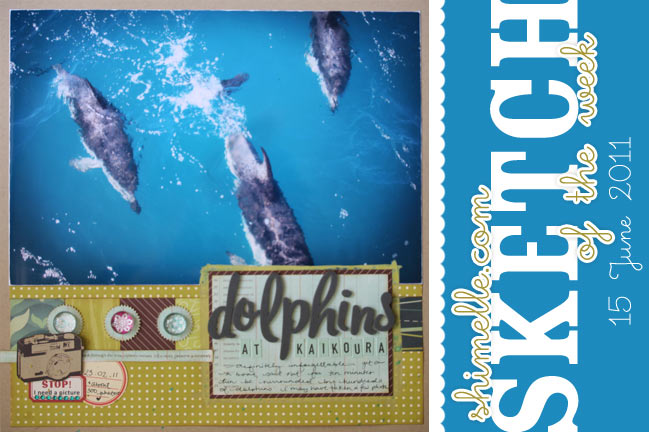
A few little things came to mind last week while I was sorting albums – thoughts about handwriting but also thoughts about the size of the photos I use. I adore my 4×6 photos and the majority of my pages include that size, but I love the variety that an oversized picture can bring to the story. Larger pictures are great for adding contrast to an album and the pages come together very quickly. I really like enlargements for pages that become the start of a section of an album, and the day we spent with about four hundred dolphins? I may have taken enough photos to make it become a definite section of the album! (For the adventure-curious, The Boy swam with them and I took pictures from the boat. Worked perfectly!)

scrapbooking sketch and page ideas
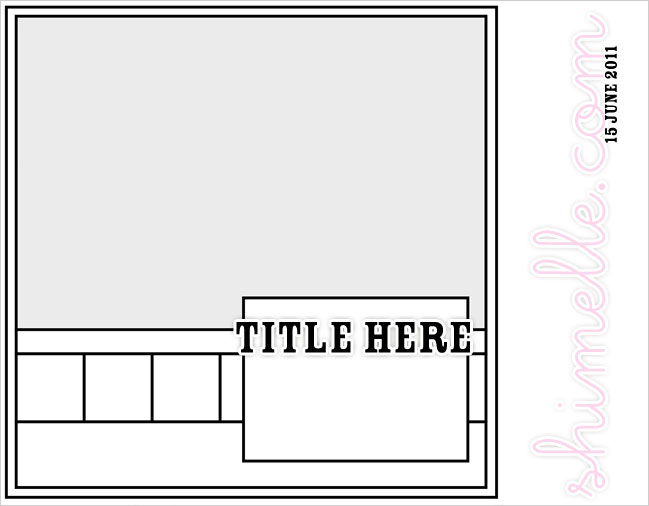
This sketch looks very plain, but I wanted to include this version here as it’s what I started with to create my page. Once I had followed everything that is here, I decided I needed more and added a cluster of embellishment to the bottom left, a small stamped border and three circular embellishments on the line of squares. You can stick to the original sketch, follow my adaptations or add your own extras. Here’s a look at how I created this week’s page:

As always, the weekly sketch is no-stress and just for fun! If you use it, I’d love to see, so please leave a link to share.

scrapbooking sketch and page ideas
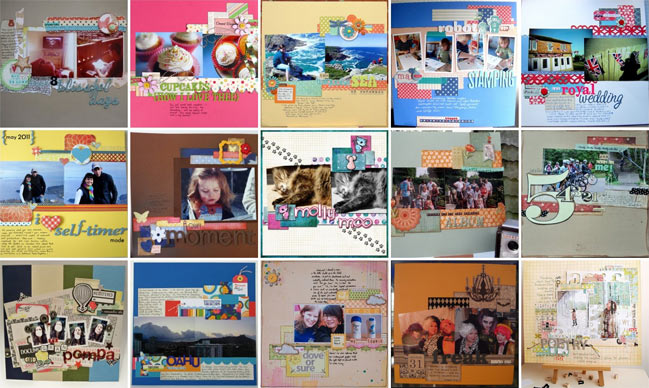
There were so many fab pages submitted last week – it was certainly the most difficult week yet to pick favourites! Here are fifteen standouts – click any of the links below to see the pages in more detail and meet the scrappers who created them. (And click back to last week’s sketch for even more pages!)
Top row, L to R: one, two, three, four, five.
Middle row, L to R: six, seven, eight, nine, ten.
Bottom row, L to R: eleven, twelve, thirteen, fourteen and fifteen.

xlovesx

Scrapbookers, what's inspiring you?

share a thought
may the world inspire
Those older pages yesterday made me itchy to write things with fancy letters but I didn’t know where to start. Hoping something will come to mind today.

So… what’s inspiring you lately?
May today be beautiful wherever you may be.

xlovesx

PS: I’m hosting this week’s photo challenge at Two Peas if you want to give it a go!

Scrapbooking giveaway winner

scrapbooking giveaway winner
Pidgen

This weekend’s winner is Pidgen who wins The amazing cutlery decals from Household Words.
Please email me (shimelle at gmail dot com) with your address!

If you love the cutlery set – be sure to log onto Mandie’s Etsy Store to see her other beautiful work!

There’s a new giveaway every Friday night, so check back next week for another chance to win just by leaving a comment.

Have a great week!

xlovesx

Scrapbook talk :: Organising the early years in an album

scrapbook organisation :: early years album
After the discussion of albums in two recent posts (here and here), this particular album became the topic of several discussions over the past week. I’ve said I don’t create in chronological order but I do store my pages in chronological order in albums, and that I have yearly albums (and often multiple volumes per year) for my scrapbooks from the year 2004 to the present. But what about older photos that predate 2004? And how does it affect the look of an album if the pages are created many years apart?

I do keep pages that predate 2004 in chronological order, in an album titled ‘The Early Years’. It’s certainly not everything pre-2004, but rather some highlights from growing up. Some pages are very new, others are ten (or more) years old. I haven’t added all of my old pages here nor is it the only album that has pre-2004 photos, but it is an album I’m happy to share with anyone who would want to have a look at something other than our yearly albums. I’m actually at the point where I’m going to split this album into two volumes, so before I added half of these pages to their new home, I photographed the whole album in order so you can see how it all ends up together. Heads up: there are a lot of photos in this post! You can also scroll down to the end for the answers to questions that came up in the comments.

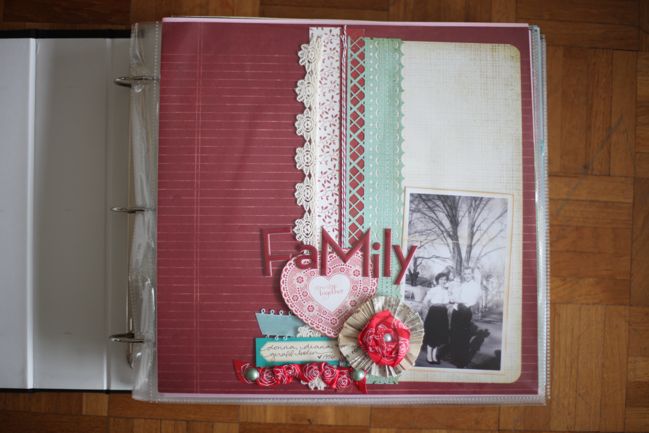
The page above starts the album and it’s not really a title page – it’s there because it’s in chronological order. I’ve only scrapbooked a few layouts with photos that predate me, and this is one and it’s a single page. So it became the first page in the album, at least for now. I made this layout in early 2010. (That photo is grandparents and my mum as a baby.)
scrapbook organisation :: early years album
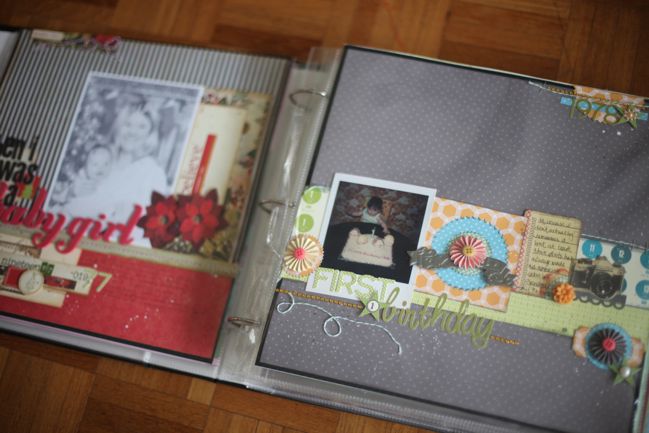
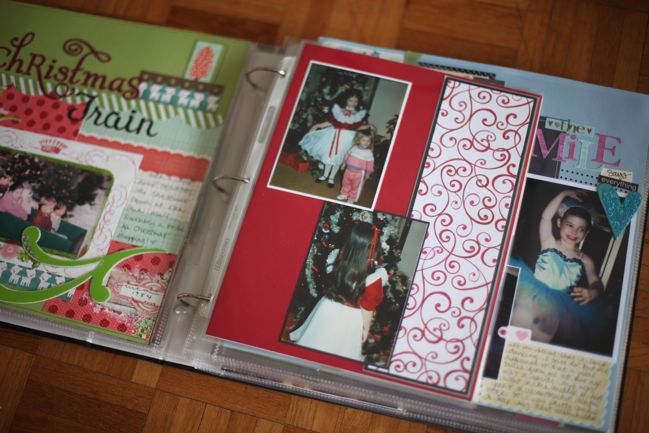
These two pages are recently created, but old photos – my first Christmas and first birthday. The photo on the left page was scanned and I printed it in black and white on my home printer. The photo on the right is an actual old Polaroid.
scrapbook organisation :: early years album
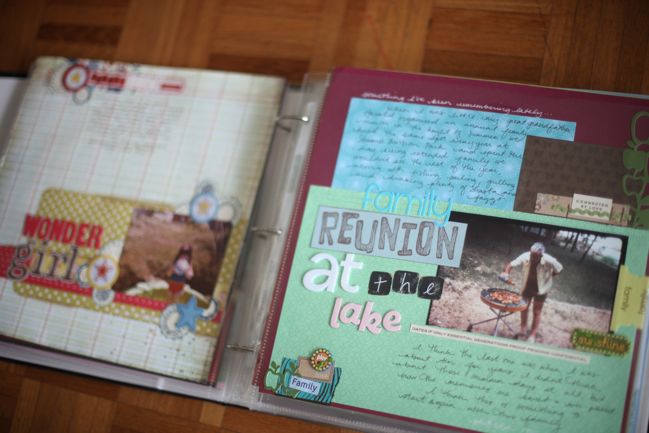
The page on the left is recently created, with an original print (rounded corners and all!) from 1980. The page on the right I made in 2008, and that photo was printed on my home printer from a disc of scanned family pictures.
scrapbook organisation :: early years album
The 12×12 page on the left I made in 2008. The page on the right is a bit of an oddball – it’s 8.5×11 and part of a two page spread but I have somehow misplaced the facing page! This is a much older layout – I made this is about 1999 I should think.
scrapbook organisation :: early years album
These are actual prints and I created these pages for an article in Creating Keepsakes in 2000 or 2001. These are some of the only pages from that point in time that I still actually like – but I think it’s because I did this in my own handwriting and so many of my layouts at that point had all the words printed on the computer. I’m not a huge fan of that element of my older pages. In this case, the title is hand-lettered too, then I handstitched each letter in a different colour and the letters are on pop-dots – so there are several things evident on this older layout that have come through to my current style.
scrapbook organisation :: early years album
Here I ended up with an awkward pairing so added something to fill the gap. The previous pages are 8.5×11 but I also have a 12×12 page with the same photos. So I added a very simple page that is mostly one photo to fill that empty 8.5×11 space in between. That picture was originally much smaller, and then it was scanned and ended up on that same disc of family pictures. I printed it at A4 on my home printer, and although it’s not as sharp as the original, it’s just fine.

Something else to note – when I created the 12×12 page on the right, I had already scrapped the originals on the previous layout, but I needed those pictures for an assignment. So I photographed the layout, cropped down to the pictures and printed them that way. Worked just fine, and even the large photo printed on the transparency actually came from a photo of the layout. This page was made in 2009, I think? It was for an article in Scrapbook Inspirations.
scrapbook organisation :: early years album
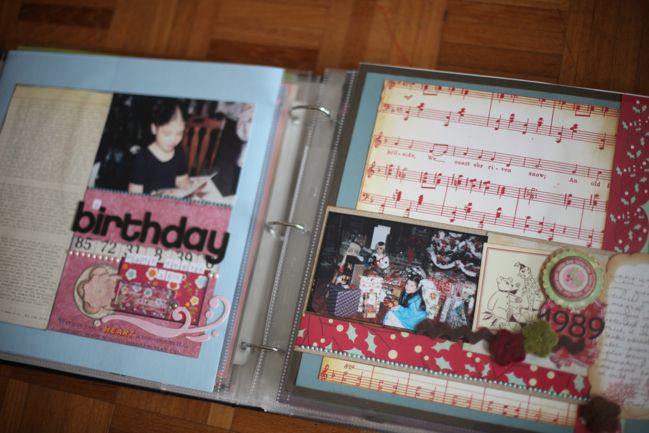
These layouts were both made in 2009 with photos printed at home. I’ve realised this week that the date on the right hand page is definitely out – I had guessed but now I think it is more like 1986 than 1989! So perhaps I can just turn the sticker upside down? They weren’t made at the same time and weren’t planned to go together or anything – they just ended up there by way of chronological order. The page on the right became a sketch challenge for UKScrappers, with a free template to download here.
scrapbook organisation :: early years album
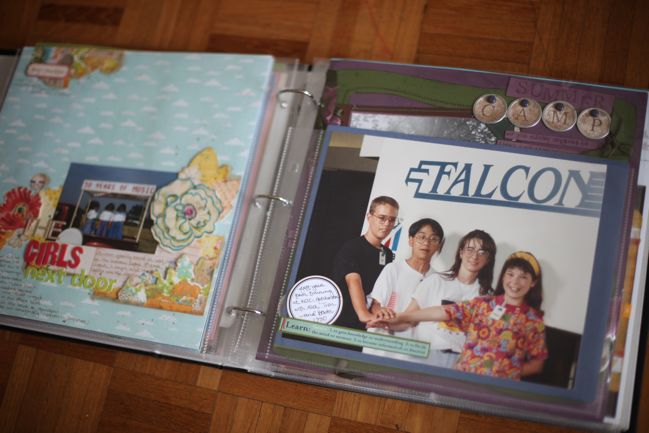
The layout on the left is one one made recently, then there’s a landscape 8.5×11 page protector that holds two oddball photos. I have two formal 8×10 portraits from… well… space camp, basically. I haven’t really scrapbooked any of my hilarious experience of spending my summers on multi-axis trainers and studying rocket science. It’s something I need to do, obviously! But so far I just have these two photos in the album so they are safe and protected. This was my flight team in my first year…
scrapbook organisation :: early years album
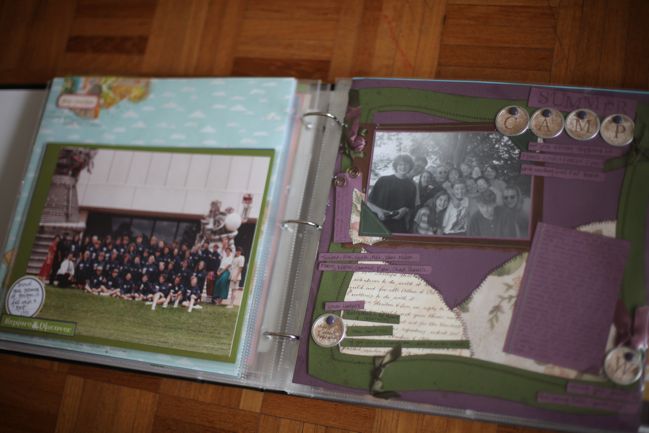
…and this was our full crew in my second year. In NASA jackets. Next to various rocket parts. So those are just attached to 8.5×11 cardstock and there’s a journaling spot to name and date them, but the rest of that entire adventure is on the to-do list. Then back to 12×12 on the right, with an older layout. The photo is from 1993 and I made the page in 2003. The picture was in colour but I had it reprinted in black and white from the negative because the colour was pretty washed out anyway. It was taken on my instamatic so not exactly the height of photographic technology.
scrapbook organisation :: early years album
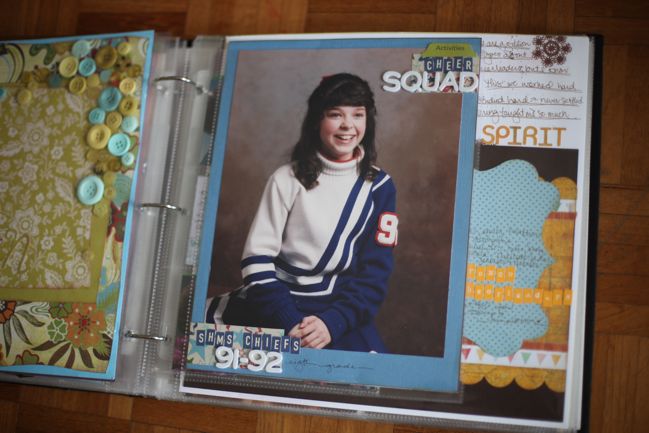
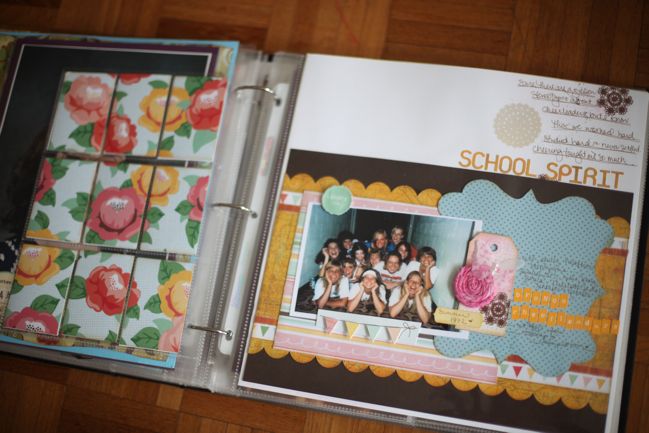
12×12 on the left, with a layout I made in 2007 and on the right, and 8.5×11 page to hold an 8×10 picture from middle school. This had just been sitting in the page protector, so a few weeks ago I added just that little bit of embellishment with some leftovers from another page. I have scrapbooked quite a few pages about cheerleading in high school but nothing other than this about middle school – mostly because I don’t have anything other than the formal photos (and they are pretty cheesy).
scrapbook organisation :: early years album
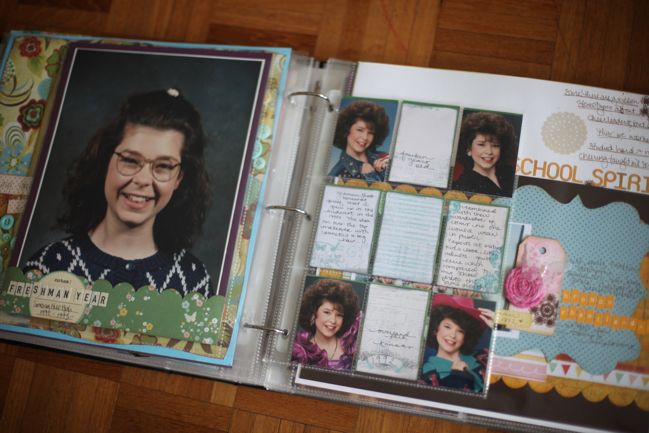
This one makes me laugh so very much. The picture on the left is my school photo from my first year of high school – the autumn of 1992. Now actually that means this picture is out of chronological order, because the pictures on the right are from August of 1992, but I wanted them to be side by side like this so forgive the calendar confusion just this once. It’s the Glamour Shots that make me laugh. Apparently Glamour Shots still exists? And they have changed their game a little now. But in the early 90s, they had a very strict formula: they would make your hair as big as possible and add tons of make-up (no matter what your age) then photograph you in soft focus with these crazy outfits that no one would ever wear in public. In fact, the outfits were so crazy and the hair was so big you couldn’t wear them like regular clothes. You wore a tube top and they draped clothes over you, so it was either jackets or wraps in every single picture. That pink thing that looks like a prom dress was really just sparkly fabric that they kept wrapping around me then two big baubles they tied to my arms. The end result was everyone they photographed seemed to become the same age! So those pictures were taken one month before the school picture (with significantly less make up and hairspray). I don’t really have any amazing story other than thinking these photos are funny. That page protector is from the Pink Paislee portfolio album (and the holes fit in the 12×12 book just fine).

This is the point where this album will be broken into two volumes – I have more high school stuff than earlier, so the beginning of high school is a good break to separate the pages and have the freedom to add more to the story.
scrapbook organisation :: early years album
At the moment I don’t have any other small photos to fill the back of that page protector, so I just cut a piece of patterned paper to fit and chose something that would coordinate with the page on the right, which I made last year.
scrapbook organisation :: early years album
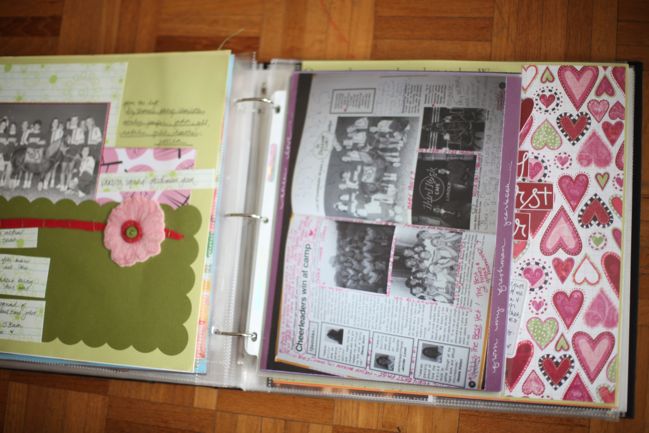
Much older page on the left – and a page I don’t love. This was a photo from our high school yearbook and I managed to salvage the original print when they came back the following year. But apparently I was in a quite minimalist phase when I made this page (2006, I think) as there’s not even a title. At some point I think I will rework this page. And the page protector on the right is something a little different – I photographed the cheerleading spread from my high school yearbook, including all the notes we had written over those two pages, and just printed it at A4 and cropped it to add to an 8.5×11 sheet of cardstock. No real scrapbooking elements but a lot of storytelling.
scrapbook organisation :: early years album
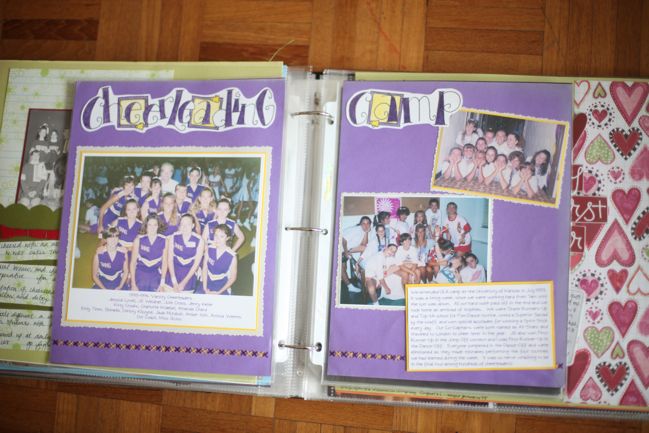
Oh hello there, old pages! These were for an assignment with PaperKuts magazine in 2001 with pictures from 1993. I had these reprinted from the negatives (and they are from that same instamatic that didn’t do so well with colour). Hand-lettering in the title but everything else is typed and printed, which I don’t love. But I do love that I still had a notebook with all my bits and pieces from this point in life so I had written various factoids about camp and the prizes we won, routines we performed and so on. The deckle scissors really date this, but I don’t think I will rework this page. Though the cardstock on this is really fading (it is not nearly the quality we have available today), especially at the far right.
scrapbook organisation :: early years album
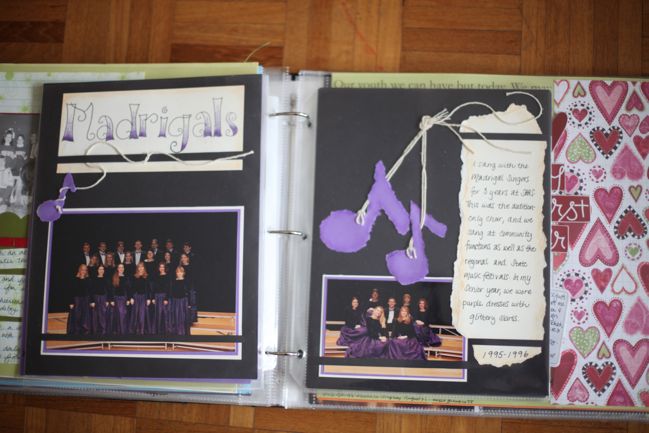
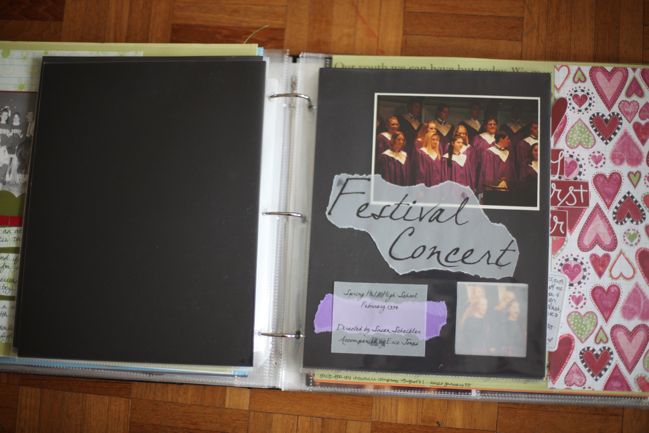
Again, old pages here – made around 2001, for an article on how to tear paper! Amazing, I’m sure. These photos are of my school’s version of glee club. We didn’t have nearly as many amazing costumes as they do on television!
scrapbook organisation :: early years album
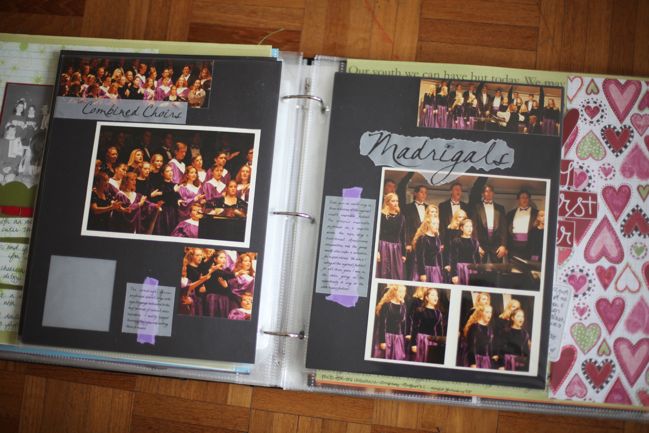
More singing pictures from the same time frame, but awkward in that I ended up with an empty page, so I’ve just added a sheet of plain black cardstock there for now. I’m planning to fill that with journaling and glee-filled memories of our high school choir, as I didn’t really write much on these older pages. Also, gotta love the trendy vellum. This window effect was for an article on multi-page layouts, I think.
scrapbook organisation :: early years album
…same event, continued.

scrapbook organisation :: early years album
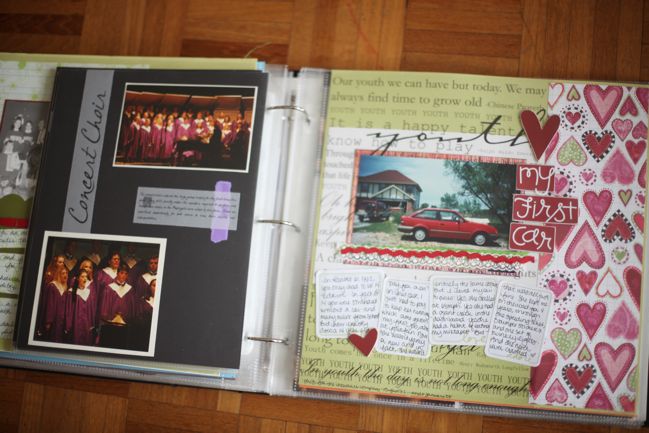
…and it finally concludes. Then back to 12×12 on the right, with a page about my first car. Very different styles from the left to the right, and I do have photos that fall between these two in dates, so maybe that will help to bridge the styles. But I don’t really mind too much. I think I made this layout around 2006.

By the way – for a long time I thought I didn’t have any photos of my first car for some reason. Then we realised there were quite a few, as we had to photograph it from several angles for the car insurance policy! Handy tip if you’re looking for old pictures that might be in your household records rather than your photo files.
scrapbook organisation :: early years album
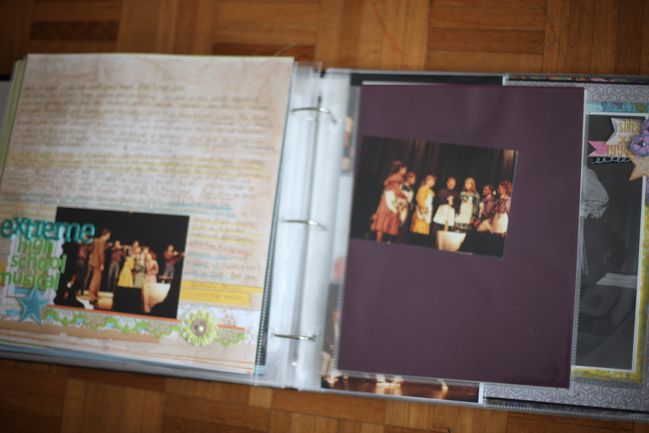
12×12 with lots of journaling on the left (made last year) and then an empty page with some photos set aside to go there. That means it’s on my to-do list! But it needs to be photos from that event because the following pages…
scrapbook organisation :: early years album
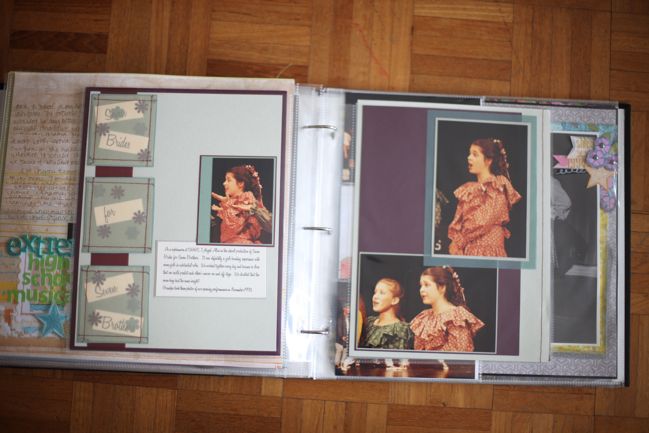
…are also from that. But made many years ago! This layout was part of my hall of fame entry in 2001.
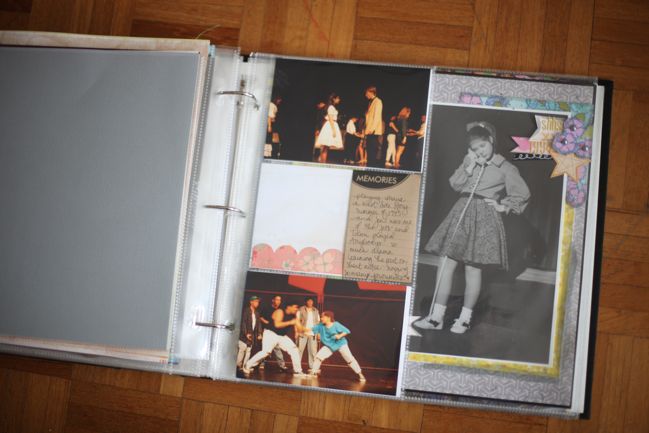
scrapbook organisation :: early years album
And then a big gap, really! Nothing but plain cardstock on the left, and a couple photos plus a journaling card on the right but they aren’t really scrapbooked – they are just added here because it’s the right spot in the timeline. I actually have several layouts about those photos, but they are in a much older album that I don’t have out on display right now. I came across these two photos and put them here as a reminder to go through that particular older album and pull out what I would like to include here. Some of those pages will be things I don’t want to include – lots of photos cut into shapes with no journaling. But others will be more in keeping with the narrative, even though I know they are all very minimal, all in red and black and all have typed journaling. That’s okay.
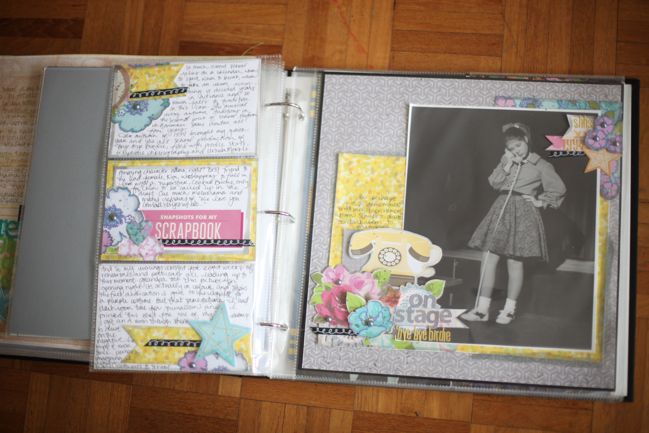
scrapbook organisation :: early years album
This very recent layout with the additional journaling in a 6×12 photo protector, which I wrote about last week.
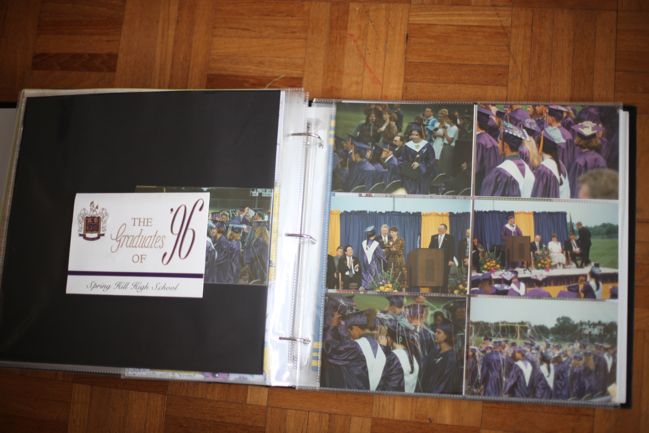
scrapbook organisation :: early years album
Pages that really aren’t done at all – but I had fourteen 4×6 photos from my high school graduation, so I added them all to a photo protector for now and included my graduation announcement here too, but I haven’t done anything else creative with these just yet.
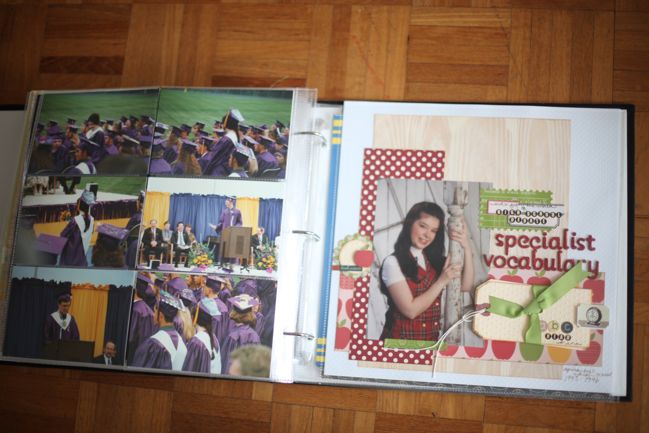
scrapbook organisation :: early years album
And one last layout here that I made last summer about all the strange phrases and abbreviations used in high school debate. This one is out of sorts with the timeline and I need to find a good place for it to go – but it’s not from a specific date and debate was something that was part of my entire four years in high school (and actually university too) so it’s not one that is easy to pick a date.

Some questions and answers on the subject of album organisation:

Don’t albums cost so much that it’s hard to keep up with lots of layouts?
As albums are a higher priced item, I take advantage of sales and stock up whenever there is a good price. Two Peas has run the black album at 50% off at times and the red albums have been on sale lately too. If you’re really short of albums compared to your stack of homeless albums, count up your pages and figure out how many albums you need and stock up when you can find a discount – that would be my best advice! I love that albums make it easy to look back at the pages and the stories, and definitely think albums are worth the investment for keeping pages secure and shareable. I also automatically buy a second pack of page protectors to add to an album whenever possible, so I start with twenty instead of ten. I try not to have more than twenty 12×12 page protectors in one album (though my pages are often quite bulky, so more could fit with flat pages).

Why do you prefer 3-ring over postbound albums?
A little background – I started with ring binders way back at the beginning and then I moved over to postbound albums when I started making 12×12 pages. For about four years, everything was postbound and I saved up for fancy fabric-covered albums that were £30 to £40, because that was what was available. At first, I thought they were great quality and I added the extender posts to make the most of each album. But by the end of those four years, I was disenchanted as the expensive albums fell apart, and I found it so difficult to arrange the pages since taking one page protector out meant taking the spine apart. So although some pages might look prettier without the rings in the middle, I’ve just had much better luck with making ring binders work for me. The ring binders available today are much higher quality than the first few I bought way back in the late 90s and I just find they are the best solution for the way I scrapbook.

Are there any 3-ring binder albums that don’t require page protectors?
Well, yes and no. Binders usually come with page protectors and it’s assumed you’ll put your pages in protectors. But the rings in a 3-ring binder are a standard dimension and in the US you can buy a three-hole punch used for adding pages to notebooks (like at school). If you don’t like page protectors I don’t see why you would have to use them when you could use a three-hole punch with cardstock or chipboard to make your pages instead. Or you could cut your own paper from large sheets down to 12×13 or so to add a margin to the centre edge and punch the holes there? I definitely like page protectors, so I hadn’t really thought of it before you asked!

How do you deal with two page layouts in a 3-ring binder? Isn’t it hard to read if the title or journaling goes across the join of the two pages?
It depends on the layout. Sometimes it just doesn’t bother me at all. Other times it can be hard to read, so I’ll sew two page protectors together so the pages don’t separate when the page is turned. If you don’t sew, you could use double-sided tape to attach the page protectors.

How many albums do you have? And how are they stored?
Okay, I’ve counted my 12×12 albums in my studio and there are forty-six of them. They are stored in the cubes of an Expedit bookshelf (I have the large 5×5 unit). I used to have them on top of the unit but I am enjoying them far more now they are within reach on the bottom two rows of the shelf. (But keep in mind that I live in an upstairs flat so I do not have to worry about flooding. I wouldn’t keep albums on a bottom shelf of the ground floor and I would try to keep them away from any pipes or anything else that could cause horrible damage if something went awry.)

Where did you get the metal-edged circle tags?
Metal-edged circle tags are tremendously easy to find in the US, as they are stocked in most office-supply stores. In the UK, not so much. There are a few shops that import the Avery office tags but put a ridiculous price on them. And for several years, Making Memories and EK Success sold them as a scrapbooking product. If you’re looking for them in the UK, it’s worth having a look at some of the older stores that may still have that in stock. Otherwise sweet-talk a friend who is visiting stateside if it’s something you don’t need immediately!

Do other people suffer from the page protectors ‘falling out’ the bottom when the album’s not full yet?
Do you mean the page protectors tend to hang at an angle? I’ve seen this in some albums at crops but I’ve never really experienced any trouble with it in my own albums. I store all my albums standing upright, so I would think there would be that extra pressure on the top hole of the page protector but everything seems to be holding up okay.

What do you do with the thick pages?
Most of the time, I just try not to face something really bulky against something it could damage – like no giant resin flowers pressed against a photo on the opposite page. There are always two full sheets of cardstock in each page protector (if I make a page on patterned paper, I will back it with cardstock when it goes in the album) so the pages themselves are quite sturdy. Occasionally if something is really problematic, I’ll add a chipboard page opposite and just cover that with a piece of patterned paper rather than a layout. And in the case of layouts on cardboard, like this one, I attach them to the outside of a page protector with a fair helping of super tacky double-sided tape.

Who makes the divided page protectors and 6×12 page protectors?
They are made by American Crafts, who do several types of divided page protectors they call photo protectors. The 6×12 protectors can be found here – look below on that page and you’ll see several other sizes, like the 10×12 and 12×12 options.

How do you store your negatives?
I’m afraid they aren’t very organised – just safe. They are kept in a metal photo filing box that seals and that lives tucked away in a cupboard. So they are dry and cool and out of any light. Once I open the box, they are all just in there and most of them came in sleeves from the developers, so I labelled those and although it’s not super organised, it is easy enough to find something usually!

Have you scrapbooked older photos of The Boy?
No. Not that I don’t want to – but more that he’s not really interested in that right now and I’d rather work on that when he feels there are stories to tell. If the timing is right, I think it would be a really fun project, actually. But for now, it’s just me.

Album organisation is a topic that’s coming up in a few places recently, so if this has you thinking, you might also want to check out this post where Ali Edwards takes you through her daughter’s baby album or this post from Melissa Stinson, which collects several different scrapbookers’ album organisation processes into one place.

I really don’t think there’s any one way to make album organisation work – it’s just a case of finding what makes you happy. For me, that has meant editing from hundreds of old layouts to finding the pages that really help tell the story and mixing the old and the new pages together, but telling the story in chronological order when you look at any particular album. That might not be the right system for you at all – but it is what I love. So thanks for making it this far through a marathon of a blog post about this particular album!

xlovesx

Photo editing :: adding drama to an overcast scene

photo editing - adding drama to overcast scenes
editing overcast photos
Oh for the love of all that is good, is anyone else tiring just a little of the overcast sky effect? It seems to be descending over my neighbourhood at least every fifteen minutes, even if the other fourteen minutes seem lovely and blue. One day this week I was convinced I was causing the rain as I would get ready to leave the house, look outside and see a clear sky, head out the door and be drenched by a sudden downpour in not more than fifteen steps. We did have a beautifully summery April… it now seems we might be suffering from early-onset autumn.

Which leads me to think about overcast photos. Sometimes an overcast sky is just what you need – it can be gorgeously flattering to skin tones, it means no one will squint. Very nice, but it tends to fall a bit flat for me in terms of scenery. I present the photo above as evidence. It was taken on a long hike to Broadway Tower in the Cotswalds, and it goes without saying that we didn’t visit on a day with quite so much bright blue brilliance as the images on their website. But it wasn’t stormy and moody in the sky either – just plain grey with lots of thick cloud and shadow.

I don’t do a lot of drastic editing to my photos, but I do try to punch up the drama a little bit when things fall flat. I also try to keep things to a quick workflow so I don’t feel chained to my computer forevermore!

Before we get started: I use Totally Rad Actions for much of my editing. If you do a lot of editing or want a worthwhile professional editing set for Photoshop, they are definitely worth a look. If that’s not the right match for you, you can find lots of free actions and tutorials out there, and I really suggest trying all the options available at Picnik if you want to try editing effects with no investment in software or tools.

editing overcast photos
First, I wanted to boost the detail to add a bit more grit to the trail and definition to the grass. I use the Boutwell Magic Glasses action for this and left it at the full 100% opacity.

editing overcast photos
Second step was to boost the colour a bit to get out of that overall grey cast. With the Magic Glasses layer selected, I chose hue/saturation from the image adjustments menu and moved the saturation slider up to 25. Now there’s more colour in the greens, more red in the dirt path and there’s a slight bit of blue in that very grey sky.

editing overcast photos
Third step was to darken the corners to add some drama. I usually shoot in that style anyway – a wide open lens will add some natural vignetting to the edges and much of the image will already be in soft focus. But there just wasn’t enough contrast so I added a bit more with the Vignette & Blur action, set to 25% opacity.

editing overcast photos
And finally, something for the sky. There just wasn’t enough colour or texture there in the shot to create something dramatic in the clouds, so instead I added a texture that doesn’t look like clouds at all. The Dirty Birdie texture looks a bit like what would happen if you photocopied a blank piece of paper over and over again on a photocopier that really needs to be cleaned. I applied the texture to the whole picture in a new layer, then used the eraser tool to remove most of it from the foreground, leaving the most visible noise at the top right edge and just to the right of the top of the tree. Then I reduced that layer to 85% opacity to blend it a bit.

editing overcast photos
Is it a huge difference from the before to the after? Perhaps not – but I didn’t want it to look like a completely different picture. There is definitely more detail and some more power in that bland overcast sky, so for just a couple minutes of editing, I’m happy with that!

By the way, if you tend to take pictures of actual people instead of dirt tracks and old towers, Cheryl Johnson has a new workshop on portraits starting soon. Just a heads up!

Now… off to catch up on some crafting on this overcast afternoon, I do believe!

xlovesx